How Aerial Progress Tracking Helps Contractors Stay on Schedule and On Budget
Discover how drone technology is helping contractors catch errors early and save thousands in rework
4/30/20262 min read
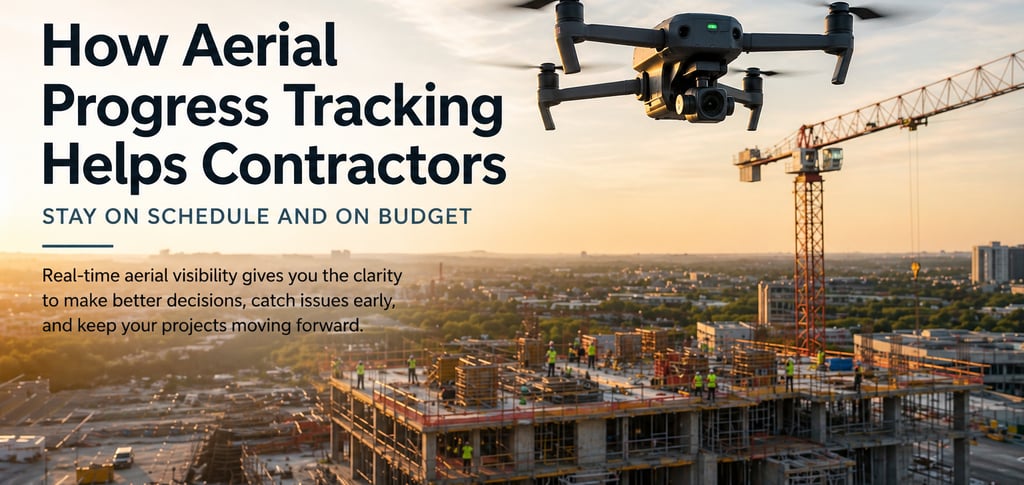
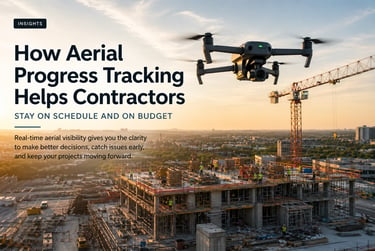
Keeping a construction project on schedule isn’t just about planning—it’s about visibility.
One of the biggest challenges contractors face is not knowing exactly what’s happening on-site at all times. Between subcontractors, tight timelines, and multiple moving parts, small issues can go unnoticed until they turn into delays or costly rework.
That’s where aerial progress tracking changes the game.
1. See the Entire Job Site—Not Just Parts of It
Most site checks happen at ground level. You walk the site, talk to crews, and review specific areas. But you’re only seeing pieces of the project.
Aerial updates give you a complete view of the entire job site in one shot:
Structure progress
Material placement
Crew activity
Site organization
This makes it easier to quickly spot:
Areas falling behind
Miscommunication between crews
Work that doesn’t match the plan
Instead of relying on assumptions, you’re working with clear visual proof.
2. Catch Issues Early (Before They Cost You)
Delays rarely happen all at once—they build up from small issues that go unnoticed.
A missed step.
Incorrect installation.
Work completed out of sequence.
When you have regular aerial updates (weekly or even more frequently), you can:
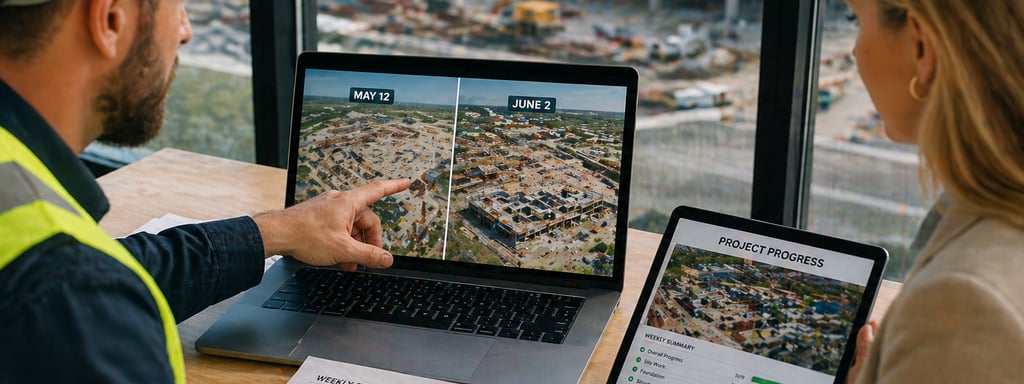
Compare progress over time
Verify subcontractor work
Identify problems early
Fixing something early might take a few hours. Fixing it later can cost days—or even thousands of dollars.
3. Keep Subcontractors Accountable Without Micromanaging
Managing multiple crews is one of the hardest parts of any project.
Aerial documentation gives you a neutral, visual record of what’s been completed and when.
This helps you:
Verify that work was done as expected
Track progress without constant site visits
Have clear reference points during discussions
It’s not about micromanaging—it’s about having visibility.
4. Improve Communication with Clients and Stakeholders
Owners, developers, and stakeholders don’t visit the site every day—but they still expect updates.
Instead of long explanations or scattered photos, you can provide:
Clean aerial images
Progress comparisons
Clear visual updates
This makes communication:
Faster
More professional
Easier to understand
And it builds confidence that the project is under control.
5. Save Time Without Sacrificing Oversight
Driving between sites, walking large properties, and checking every detail takes time.
Aerial progress tracking helps you:
Reduce unnecessary site visits
Get quick updates without disrupting crews
Stay informed even when you’re off-site
You’re not replacing on-site management—you’re making it more efficient


Contact
Email: info@dronecaliper.com
Phone: (443) 813-3160
© 2026 DroneCaliper. All rights reserved.